Setting up a massage therapy room requires more than furniture and good intentions. A professional treatment room needs a massage table with 30-inch clearance on each long side, controlled lighting at 2700K-3000K bulb temperature, the right linens and modality-specific tools, and an intake system for health history and contraindication screening. Independent massage therapists in Texas must hold a current TDLR license before seeing a single client, regardless of practice setting. A salon suite provides the physical infrastructure: private space, utilities, WiFi, and HVAC climate control. The therapist provides the practice: equipment, supplies, intake process, and professional setup.
An independent massage therapist owns their schedule, sets their own rates, and keeps everything they earn. That is meaningfully different from spa employment, where you work the hours you are assigned, see the clients you are given, and take home a percentage of the service fee. Suite rental replaces the commission split. For therapists with an established client base, the economics generally favor independence.
This guide covers the complete massage room setup process: what to bring, how to design for calm and function, what your Texas massage license requires, and how to structure your business before you open your door.
A professional massage therapy room starts with licensure and builds outward from there. You are no longer an employee; the room is your business. That ownership starts with your TDLR license.
Your Texas Department of Licensing and Regulation (TDLR) license is non-negotiable. TDLR governs all massage therapy practice statewide and requires a current license before you practice in any setting, including rented suites, private studios, and mobile work. Suite rental creates no exemption. Your TDLR license certificate goes on the wall before your first client walks in.
Important
If your TDLR license is lapsed or pending renewal, you cannot legally see clients, including in a rented suite. Practicing without a current license is a TDLR violation, not a technicality. Confirm your license status at tdlr.texas.gov before booking any clients in your new space.
With licensure confirmed, suite rental handles the space itself. A Venus Salon Suites Frisco suite provides private walls, a lockable door, utilities, HVAC climate control, high-speed WiFi, and on-site laundry. What you bring is the practice: your massage table, supplies, intake forms, and professional setup. The sections below walk through each layer in order.
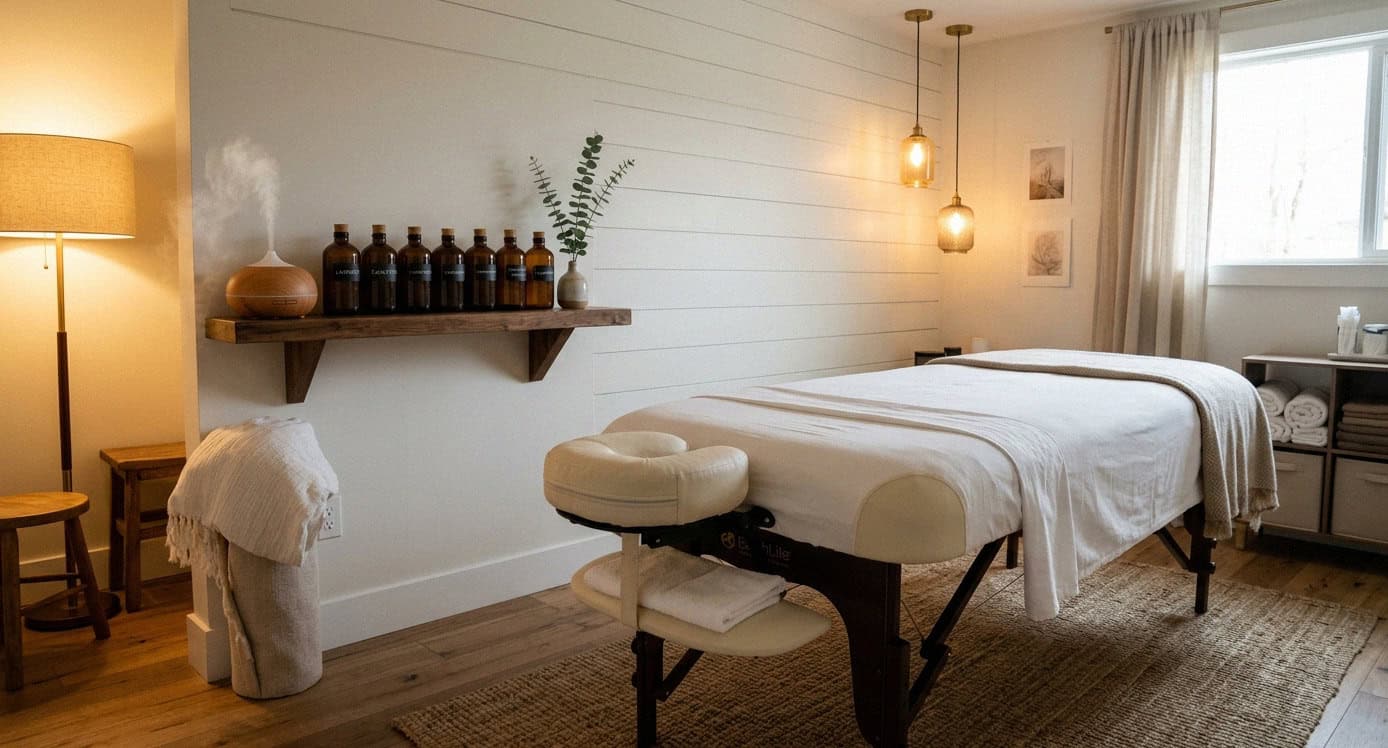
Warm, dimmable lighting and concealed storage create a professional massage room atmosphere before a client lies down. That response is deliberate, not accidental. It results from specific choices about color temperature, sound masking, scent diffusion, and surface organization.
Color and surfaces. Warm neutrals and muted earth tones work consistently for massage therapy room design: soft greiges, toned creams, warm whites with gray undertones. Avoid clinical whites and high-contrast patterns. The goal is a room that looks considered, not decorated. Every visible surface communicates something about the practice; clutter communicates disorganization and breaks therapeutic trust.
Overhead fluorescent lighting is the most common setup problem in leased commercial spaces, and it is the most straightforward to fix. Fluorescent bulbs produce flat, harsh light in the 4000K-6500K range, the opposite of the 2700K-3000K warm spectrum a massage treatment room requires.
Fix it with three layers. First, dimmable LED fixtures at 2700K-3000K on a separate circuit from the overhead create adjustable base light. Second, a small dimmable table lamp positioned away from the client’s face provides practical task light during intake and draping without flooding the room. Third, low-level LED strip lighting along baseboards or behind a side table adds warmth at floor level without direct glare. A Himalayan salt lamp serves as low-cost ambient accent light with a recognized wellness aesthetic.
If your suite has a window, blackout curtains provide consistent ambiance across session times. Natural light is an asset when clients prefer it; the ability to block it out is equally useful for consistency.
Sound in a massage suite requires more planning than in a standalone clinic because suite walls are shared with neighboring professionals. A Bluetooth speaker with ambient audio, nature sounds, or instrumental music handles the client-facing atmosphere. A white noise machine placed near the door solves two problems at once: it masks hallway sounds for your client, and it prevents your audio from transmitting into adjacent suites. Both matter in a shared facility.
Essential oil diffusion via ultrasonic diffuser is standard in massage therapy rooms. The practical limitation in a shared building is ventilation capacity. Keep scent intensity low enough that it does not carry into common areas, and note scent-free preferences in client intake records. Some clients have chemical sensitivities or fragrance allergies; documenting that preference protects both parties.
Temperature directly affects client comfort and your working posture. Clients on a massage table are stationary, often partially draped, and cooling down after deep pressure work. HVAC climate control in a Venus suite gives you direct thermostat access. The 72-75 degrees Fahrenheit range is standard for massage therapy rooms; adjust based on your activity level during deep tissue work and documented client feedback over time.
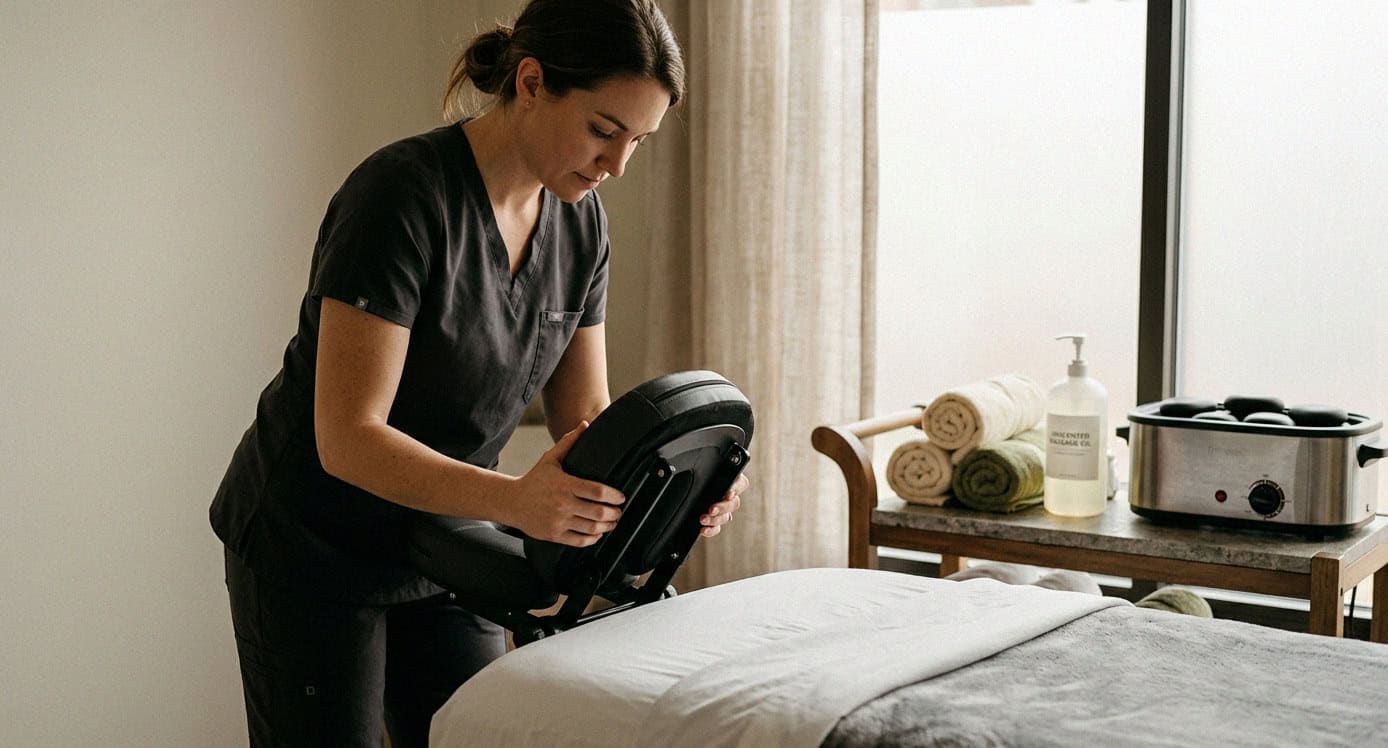
The massage table anchors the room. Everything else is arranged around it. A full-size stationary massage table requires at least 30 inches of clearance on each long side and 24 inches at the head and foot for unrestricted access during all massage modalities. Measure your suite dimensions before purchasing a stationary table. Most suites configured for massage therapy are sized to accommodate this footprint. The comparison table below clarifies what Venus provides versus what you supply, so you are not purchasing what is already available.
Hot stone massage requires a professional stone heater unit, a complete basalt stone set of 40-50 smooth stones in graduated sizes, a calibrated thermometer for water temperature verification (stones work at 120-130 degrees Fahrenheit), and clean handling towels. The heater unit needs a dedicated outlet with counter clearance. Venus suites include accessible outlets and counter space that accommodate hot stone setup without reconfiguring the room.
Prenatal massage is primarily a positioning discipline. The key addition is a side-lying bolster system or a full-length pregnancy pillow. Most therapists who believe they need a specialized cut-out table find that a quality side-lying bolster accomplishes equivalent support with more adjustability across client body types. Standard massage tables accommodate prenatal work fully; the modality-specific skill is in positioning, not hardware.
Deep tissue massage requires no unique equipment beyond the standard setup. The most impactful variable is table height. A lower table position gives you the mechanical advantage for sustained deep pressure work without straining your own lower back. An adjustable-height massage table pays for itself across a career if deep tissue or neuromuscular therapy represents a consistent portion of your service menu.
Many therapists researching massage room ideas are also calculating startup costs. Here is a realistic breakdown for a suite-based practice setup. Prices reflect mid-range professional equipment:
| Item | Budget Range | Notes |
|---|---|---|
| Professional massage table (portable) | $350-$700 | Adjustable height adds $100-$200 |
| Stationary table (optional upgrade) | $600-$1,200 | Best for therapists with permanent space |
| Table pad + memory foam topper | $80-$150 | 2-3 inch is the minimum |
| Face cradle | $40-$80 | Often included with table purchase |
| Electric table warmer | $60-$120 | Essential for client comfort |
| 3 sets of table linens | $90-$180 | Fitted cover + top sheet + bolster cover per set |
| Cervical and knee bolsters | $60-$120 | Both are standard; arm shelf is optional |
| Massage medium (oil/lotion/cream) | $40-$100 | Professional grade, pump dispensers |
| Dimmable lighting (2 lamps + LED strip) | $50-$150 | Supplement or replace overhead fluorescents |
| Bluetooth speaker + white noise machine | $60-$120 | White noise is especially useful in shared buildings |
| Ultrasonic essential oil diffuser | $30-$60 | Keep scent intensity low |
| Intake forms (paper or digital) | $0-$30 | Templates available through ABMP and AMTA |
| Sanitation supplies (first stocking) | $40-$80 | EPA-registered disinfectant, gloves, hand sanitizer |
| Total startup range | $900-$3,090 | Most therapists land between $1,200-$1,800 |
Suite rental at Venus replaces the overhead of a standalone clinic lease, buildout costs, and utility setup. The startup investment above covers your practice equipment. The suite provides everything else.
All massage therapists practicing in Texas must hold a current license issued by the Texas Department of Licensing and Regulation (TDLR). This applies to every practice setting: rented suites, private studios, spa employment, and mobile massage.
To obtain a Texas massage therapy license, you must complete a TDLR-approved massage therapy education program (minimum 500 instructional hours), pass the MBLEx (Massage and Bodywork Licensing Examination), submit an application to TDLR with the required fee, and satisfy background check requirements. Texas massage therapy licenses renew every two years and require 16 continuing education (CE) units per renewal cycle.
Key requirements for suite practice:
Texas massage therapists may also hold voluntary professional association credentials from the Associated Bodywork and Massage Professionals (ABMP) or the American Massage Therapy Association (AMTA). These memberships provide liability insurance, continuing education access, intake form templates, and professional directories. ABMP and AMTA membership is not required to practice in Texas but is standard in independent practice for insurance coverage.
For current requirements and fee schedules, visit tdlr.texas.gov. Licensing requirements noted here were last verified March 2026.
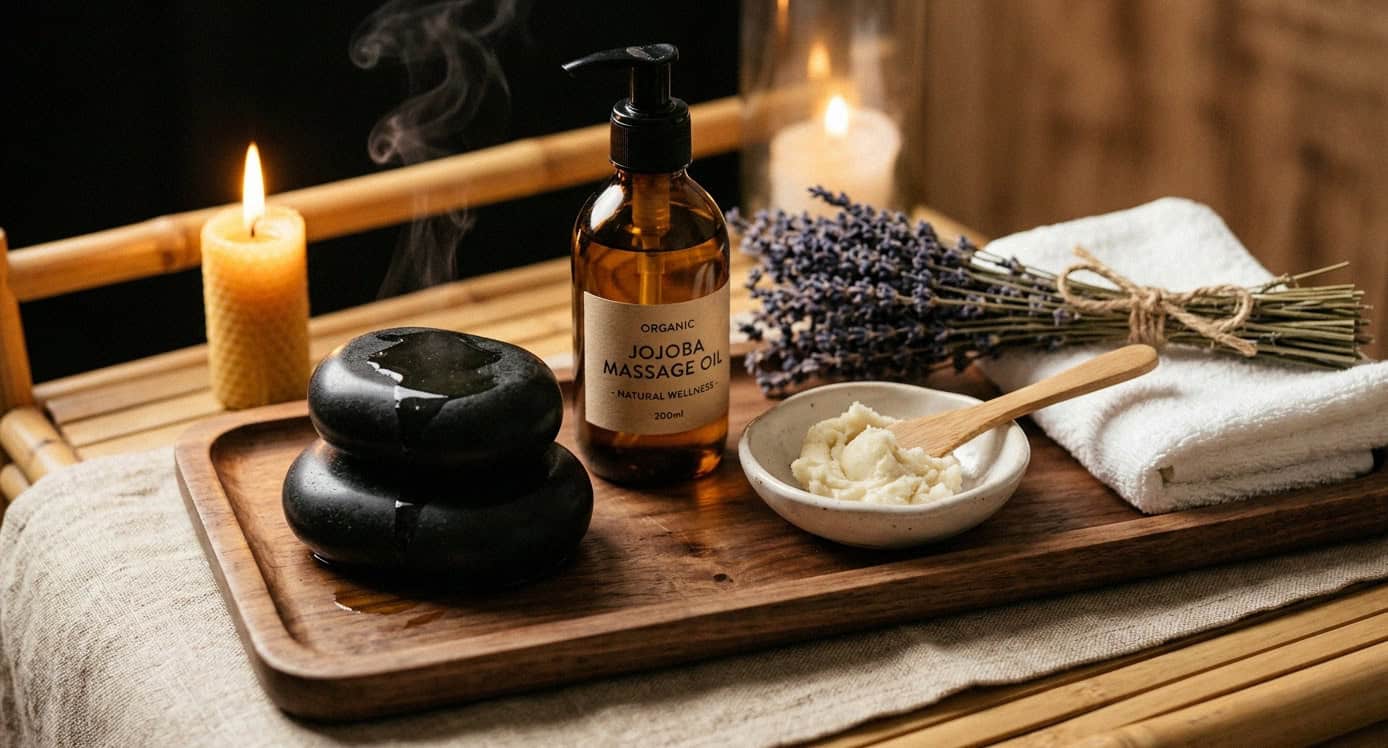
The business setup layer trips up many therapists transitioning from spa employment. You are now the owner. The suite is your business address. Every choice about intake processes, pricing strategy, cancellation policies, and scheduling system shapes your reputation in Frisco’s wellness market.
A professional intake form captures the client’s health history, current physical concerns, documented contraindications, and session goals. Paper intake forms with a dedicated binder work; digital intake software stores records more efficiently and allows remote completion before appointment time.
Contraindication screening is not optional. It protects clients and protects you from liability. Clients with active deep vein thrombosis, certain skin conditions, recent surgical recovery, or specific chronic conditions require modified or postponed massage work. Your signed intake form is the documentation record demonstrating that you asked and the client disclosed. Venus suites include counter and desk space for intake paperwork and a reception area where clients can complete forms before entering the treatment room.
Client health records also form the foundation of ongoing therapeutic relationships. Tracking session notes, pressure preferences, and treatment response over time is what distinguishes a serious independent practice from a one-time booking platform.
Set your service rates before you open. Research the North Dallas and Frisco massage therapy market, calculate your suite overhead and supply costs, and land on a price point you can explain and hold. Standard 60-minute massage rates in the Frisco area range from $90-$130 depending on modality and specialization.
A written cancellation policy protects your income against last-minute gaps. The standard for independent massage therapy practices is 24-48 hours notice with a full or partial session fee for late cancellations. Without a stated policy, you have no standing to charge for no-shows.
Online booking software makes scheduling frictionless for clients and reduces no-shows through automated reminders. Your booking link should appear in your bio, in intake confirmation emails, and in every referral request you make to existing clients.
This is the practical question that separates a Venus suite from a standalone clinic or continued spa employment. The suite provides the infrastructure. The therapist provides the practice. That division keeps startup costs manageable and ongoing overhead predictable.
| Venus Salon Suites Frisco Provides | Massage Therapist Brings |
|---|---|
| Private, lockable suite in Frisco, TX | Professional massage table |
| HVAC climate control (direct thermostat access) | Table linens, bolsters, and table pad |
| High-speed WiFi throughout the building | Massage oil, lotion, or cream |
| All utilities included (electricity, water) | Specialty equipment (stone heater, pregnancy bolster) |
| On-site washer and dryer | Sanitation and disinfection supplies |
| Professional reception area | Intake forms and client health records |
| 24/7 secure building access | Decor, branding, and personal items |
| Ample parking at 15922 Eldorado Pkwy | Essential oil diffuser and sound equipment |
| On-site maintenance services | Online booking software and scheduling system |
| Marketing directory listing | TDLR license certificate, displayed in suite |
The suite provides everything required to operate a professional treatment space in Frisco. You bring everything required to practice. This division means lower startup costs than an independent clinic lease, with none of the commission split that comes with spa employment. You pay a flat weekly rate and keep everything you earn.
Start with massage table placement. Allow 30 inches of clearance on each long side and 24 inches at the head and foot. Add a table warmer, cervical and knee bolsters, and 3 sets of fitted linens. Layer in the sensory environment: dimmable 2700K-3000K lighting, a Bluetooth speaker, a white noise machine near the door, and a low-intensity essential oil diffuser. Keep supplies in closed storage and all surfaces clear. A salon suite provides walls, utilities, and HVAC; your physical setup takes 2-4 hours once equipment is in place.
The essentials are a professional massage table, table pad (2-3 inch minimum), adjustable face cradle, electric table warmer, three sets of fitted table linens, cervical and knee bolsters, massage medium in pump dispensers, and EPA-registered sanitation supplies. Specialty modalities add to the list: hot stone massage requires a professional stone heater and a basalt stone set; prenatal massage benefits from a side-lying bolster system or pregnancy pillow.
Yes. TDLR requires all practicing massage therapists to hold a current Texas state license before seeing any client in any setting. Renting a private suite does not modify this requirement. Your TDLR license certificate must be displayed in your treatment area.
TDLR requires completion of a state-approved massage therapy education program (minimum 500 instructional hours), passing the MBLEx examination, and a submitted application with the required fee and background check. Texas massage therapy licenses renew every two years and require 16 continuing education units per cycle. Current requirements and fee schedules are at tdlr.texas.gov.
A functional massage treatment room is typically 100-150 square feet. This allows a full-size massage table with 30-inch side clearance and 24-inch head/foot clearance, a supply cart or side table, and free movement during deep tissue or full-body sessions. The more useful question for suite therapists is not minimum square footage but how to optimize a fixed space: concealed storage, a wall-mounted supply shelf, and a portable stool instead of a fixed chair all recover usable floor area in a compact suite.
At a spa, you work assigned hours, see assigned clients, and receive a percentage of each service fee (typically 40-60%). In a suite, you set your own schedule, accept clients of your choosing, price your services independently, and keep 100% of what you earn. The weekly suite rental fee replaces the commission split. For most massage therapists with an established client base, the independent practice model produces higher net income and greater scheduling flexibility.
Clean surfaces and concealed supply storage signal professional practice before a client lies down. Warm, dimmable lighting at 2700K, consistent low-intensity scent from an ultrasonic diffuser, and quiet ambient sound through a Bluetooth speaker complete the therapeutic environment. Display your TDLR license certificate on the wall. Keep linens freshly laundered and supplies fully stocked at all times. The room should communicate that the person who works here takes their practice seriously.
Venus Salon Suites Frisco has private suites available for licensed massage therapists at 15922 Eldorado Pkwy #100, Frisco, TX 75035. Suites are all-inclusive with weekly pricing starting at $250 per week, covering utilities, high-speed WiFi, 24/7 building access, and on-site laundry. There are no long-term contracts.
New tenants qualify for introductory rate of $150 per week for the first 8 weeks. That rate gives you time to build your Frisco client base without full overhead from day one.
You would be joining a community of 30+ independent beauty and wellness professionals in a building managed by people who want your practice to grow. If you are ready to stop splitting your revenue and start building your own book, call (972) 369-1127 or visit venussalonsfrisco.com to check suite availability.
Pro Tip
Test your lighting before your first client. Set up your table, lie face-up for 60 seconds, and look toward the ceiling. Any unshielded bulb in your direct sightline will cause eye strain and signal an unpolished setup. Reposition lamps so the light source stays outside the client's field of view at rest.
Introductory rate: $150 per week for your first 8 weeks on an annual lease. Month-to-month tenants get one free week.
Reserve Your SuiteStart with table placement. A full-size massage table needs 30 inches of clearance on each long side and 24 inches at the head and foot. Add a table warmer, cervical and knee bolsters, and three rotation sets of fitted linens. From there, build the sensory environment: replace overhead fluorescents with dimmable lamps at 2700K-3000K color temperature, set a Bluetooth speaker for ambient audio, place a white noise machine near the door to contain sound between suites, and run a low-intensity ultrasonic diffuser. Keep all supplies in closed storage and surfaces clear. A salon suite provides the walls, utilities, and climate control. Your physical setup takes two to four hours once equipment is on-site.
The essentials are a professional massage table with a 2-3 inch memory foam topper, adjustable face cradle, electric table warmer, three sets of fitted table linens, cervical and knee bolsters, and massage medium in closed-pump dispensers. Add EPA-registered sanitation supplies and a dedicated intake clipboard or tablet for health history forms. For atmosphere: dimmable warm lighting, a sound source for ambient audio, and an ultrasonic essential oil diffuser. Specialty modalities require additional items, hot stone massage needs a professional stone heater and a full basalt stone set; prenatal work needs a side-lying bolster system. In a salon suite, the building provides HVAC, high-speed WiFi, on-site laundry, and a professional reception area. Everything else in the list above is the therapist's responsibility.
A functional massage room is typically 100-150 square feet, with a minimum of 80 square feet for a single-table setup when space is used efficiently. Standard clearance requirements are 30 inches on each long side of the table and 24 inches at the head and foot. For suite therapists, the more useful question is how to work well within a fixed space you cannot change. Wall-mounted supply shelves, a portable stool instead of a fixed chair, and concealed linen storage recover usable floor area without reducing the workspace around the table. A compact suite set up with intention works better than a large room that is cluttered.
Most therapists setting up a suite-based practice spend between $1,200 and $1,800 on equipment. The largest line items are the massage table ($350-$700 for a quality portable, $600-$1,200 for a stationary), three sets of table linens ($90-$180), and a table pad with memory foam topper ($80-$150). Lighting upgrades, a white noise machine, a Bluetooth speaker, and a diffuser typically add $140-$330. Sanitation supplies, massage medium, and intake forms round out the first stocking at $80-$210. Suite rental replaces the cost of a standalone clinic buildout and ongoing utility bills. The weekly rental fee is your overhead; there is no commission split taking a percentage of each session.
Yes. The Texas Department of Licensing and Regulation (TDLR) requires all massage therapists to hold a current state license before seeing any client, in any setting. Renting a private suite does not create an exception. You must complete a TDLR-approved massage therapy education program (minimum 500 instructional hours), pass the MBLEx examination, and submit an application with the required fee and background check before practicing. Texas massage therapy licenses renew every two years with 16 continuing education units required per cycle. Your TDLR license certificate must be displayed in your treatment area. Venus Salon Suites requires current TDLR licensure as a condition of the rental agreement. Current requirements and fee schedules are at tdlr.texas.gov.
At a traditional spa, you work assigned hours, see clients the business schedules for you, and receive a percentage of each service fee, typically 40-60% of the session rate. In a suite, you set your own schedule, set your own prices, and keep 100% of what you earn. The weekly suite rental fee replaces the commission split. For most therapists with an established client base, the independent practice model produces higher net income at the same or fewer sessions. The tradeoff is that you handle your own scheduling software, client communications, and business admin. The suite itself provides private space, utilities, WiFi, on-site laundry, and parking. The practice is yours.
Two tools solve most sound issues in a shared suite building. A white noise machine placed near the door masks hallway sounds for your client and prevents your audio from carrying into adjacent suites. A Bluetooth speaker running ambient music or nature sounds fills the room with the right atmosphere without competing with the white noise at the door. Keep the speaker volume moderate, the goal is coverage, not volume. Most suite walls are full-height and absorb sound adequately at normal session volumes. For clients concerned about privacy, confirm this directly at intake. The combination of a closed door, white noise, and ambient audio handles the practical concern in the majority of cases.
Start with table placement. A full-size massage table needs 30 inches of clearance on each long side and 24 inches at the head and foot. Add a table warmer, cervical and knee bolsters, and three rotation sets of fitted linens. From there, build the sensory environment: replace overhead fluorescents with dimmable lamps at 2700K-3000K color temperature, set a Bluetooth speaker for ambient audio, place a white noise machine near the door to contain sound between suites, and run a low-intensity ultrasonic diffuser. Keep all supplies in closed storage and surfaces clear. A salon suite provides the walls, utilities, and climate control. Your physical setup takes two to four hours once equipment is on-site.
The essentials are a professional massage table with a 2-3 inch memory foam topper, adjustable face cradle, electric table warmer, three sets of fitted table linens, cervical and knee bolsters, and massage medium in closed-pump dispensers. Add EPA-registered sanitation supplies and a dedicated intake clipboard or tablet for health history forms. For atmosphere: dimmable warm lighting, a sound source for ambient audio, and an ultrasonic essential oil diffuser. Specialty modalities require additional items, hot stone massage needs a professional stone heater and a full basalt stone set; prenatal work needs a side-lying bolster system. In a salon suite, the building provides HVAC, high-speed WiFi, on-site laundry, and a professional reception area. Everything else in the list above is the therapist's responsibility.
A functional massage room is typically 100-150 square feet, with a minimum of 80 square feet for a single-table setup when space is used efficiently. Standard clearance requirements are 30 inches on each long side of the table and 24 inches at the head and foot. For suite therapists, the more useful question is how to work well within a fixed space you cannot change. Wall-mounted supply shelves, a portable stool instead of a fixed chair, and concealed linen storage recover usable floor area without reducing the workspace around the table. A compact suite set up with intention works better than a large room that is cluttered.
Most therapists setting up a suite-based practice spend between $1,200 and $1,800 on equipment. The largest line items are the massage table ($350-$700 for a quality portable, $600-$1,200 for a stationary), three sets of table linens ($90-$180), and a table pad with memory foam topper ($80-$150). Lighting upgrades, a white noise machine, a Bluetooth speaker, and a diffuser typically add $140-$330. Sanitation supplies, massage medium, and intake forms round out the first stocking at $80-$210. Suite rental replaces the cost of a standalone clinic buildout and ongoing utility bills. The weekly rental fee is your overhead; there is no commission split taking a percentage of each session.
Yes. The Texas Department of Licensing and Regulation (TDLR) requires all massage therapists to hold a current state license before seeing any client, in any setting. Renting a private suite does not create an exception. You must complete a TDLR-approved massage therapy education program (minimum 500 instructional hours), pass the MBLEx examination, and submit an application with the required fee and background check before practicing. Texas massage therapy licenses renew every two years with 16 continuing education units required per cycle. Your TDLR license certificate must be displayed in your treatment area. Venus Salon Suites requires current TDLR licensure as a condition of the rental agreement. Current requirements and fee schedules are at tdlr.texas.gov.
At a traditional spa, you work assigned hours, see clients the business schedules for you, and receive a percentage of each service fee, typically 40-60% of the session rate. In a suite, you set your own schedule, set your own prices, and keep 100% of what you earn. The weekly suite rental fee replaces the commission split. For most therapists with an established client base, the independent practice model produces higher net income at the same or fewer sessions. The tradeoff is that you handle your own scheduling software, client communications, and business admin. The suite itself provides private space, utilities, WiFi, on-site laundry, and parking. The practice is yours.
Two tools solve most sound issues in a shared suite building. A white noise machine placed near the door masks hallway sounds for your client and prevents your audio from carrying into adjacent suites. A Bluetooth speaker running ambient music or nature sounds fills the room with the right atmosphere without competing with the white noise at the door. Keep the speaker volume moderate, the goal is coverage, not volume. Most suite walls are full-height and absorb sound adequately at normal session volumes. For clients concerned about privacy, confirm this directly at intake. The combination of a closed door, white noise, and ambient audio handles the practical concern in the majority of cases.